Compression Benchmarks
These measurements are why cfdb 0.10 compresses with zstd_shuffle by default and sizes data
variable chunks at about 2¹⁸ elements. Chunking & Storage covers how both
work; this page shows the evidence behind them.
In short:
- Shuffling the bytes of each value before compressing makes files ~0.7× the size of plain zstd on packed grids and station series (0.83× on raw float32), and makes zstd faster in both directions at the chunk sizes cfdb uses.
- Plain
lz4is still the fastest decoder, but its files are 1.2–1.4× larger than zstd's.lz4_shuffleshrinks them to 0.76–0.95× zstd, but decodes more slowly than plainlz4. - The compression ratio barely changes from multi-MB chunks down to a few thousand elements, so large chunks buy almost no compression. Speed does depend on chunk size, and it peaks near the 2¹⁸-element default.
- Other options were measured and not adopted. Some gave smaller files but slower decoding, and
some needed a new dependency. None beat
zstd_shuffleon size, compress speed and decompress speed at once. (Other compressors, compression levels and filters are in What else was tried.)
Datasets and method
| Dataset | Content | Stored chunks | Encoded size |
|---|---|---|---|
| WRF grid | 33 variables of 12 km regional climate model output: 27 packed to uint16, 3 to uint32, 2 uint8, 1 raw float32 | (24, 1, 324, 277) = 4.3 MB | 1.1 GB |
| ERA5 3 km grid | 4 raw float32 variables | whole array, 2.5 MB | 10 MB |
| Hourly streamflow | a ts_ortho dataset: 141 stations, packed uint32 |
one station × 25 000 hours = 100 KB | 107 MB |
Each compressor is given the encoded chunk exactly as cfdb hands it over (packed integers, not the
decoded floats), and every chunk must decompress bit-identically. Speeds are single-threaded
throughput in uncompressed MB/s on one machine (AMD Ryzen 9 7900), taking the best of three runs.
Absolute speeds will differ on other hardware; the ratios between options are the useful part.
The figures are drawn from the committed result files by
benchmarks/compression/plot_docs.py.
Size and speed at the stored chunk size
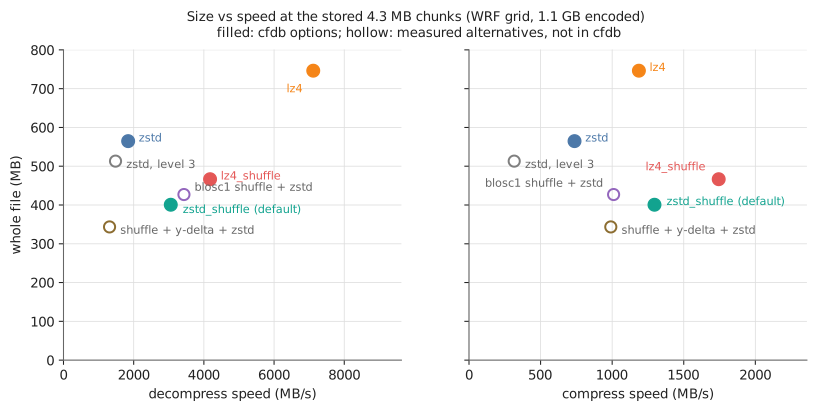
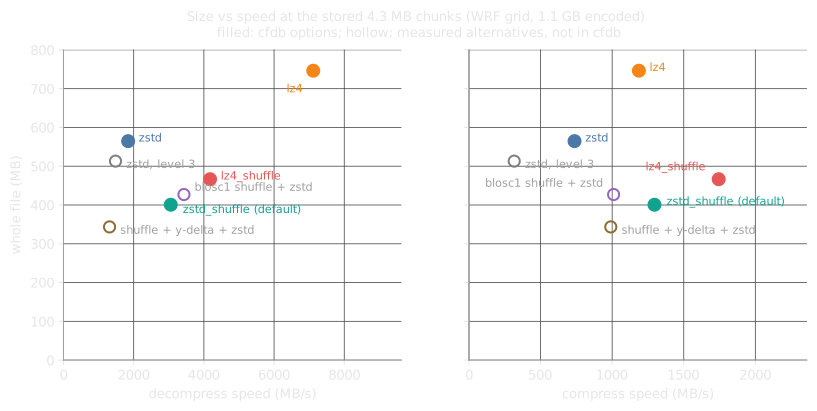
The WRF grid, re-compressed at its stored 4.3 MB chunks:
compression |
Whole file | vs zstd |
Compress | Decompress |
|---|---|---|---|---|
zstd |
565 MB | 1.00 | 740 MB/s | 1.8 GB/s |
zstd_shuffle (default) |
401 MB | 0.71 | 1300 MB/s | 3.1 GB/s |
lz4 |
746 MB | 1.32 | 1190 MB/s | 7.1 GB/s |
lz4_shuffle |
467 MB | 0.83 | 1740 MB/s | 4.2 GB/s |
Speeds are pooled over the 23 variables that compress less than 5:1 as stored. Near-constant fields, such as sea ice, compress thousands to one, and would otherwise dominate the averages.
Why the shuffle helps. A value packed into a uint16 has a smooth, predictable high byte and a noisy low byte, and the two alternate through memory. zstd has to work through that mixture, and gets only 1.1–1.4:1 on smooth fields. The shuffle stores all the high bytes of a chunk first, then all the low bytes. zstd then compresses the smooth half very well and passes quickly over the noisy half, so the files are smaller and zstd runs faster. The split and join are a few vectorized numpy operations per chunk and need no extra dependency.
Across datasets
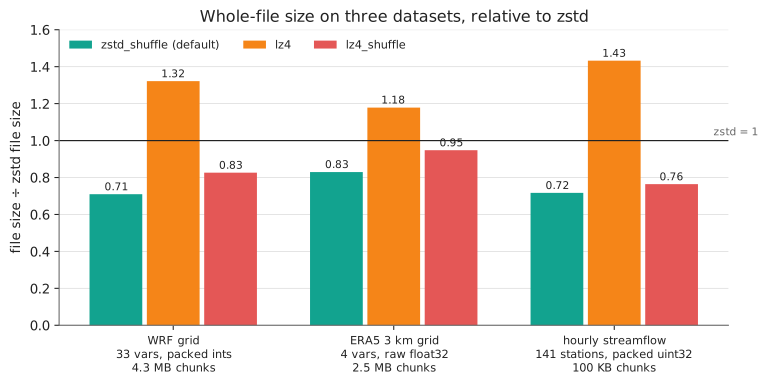
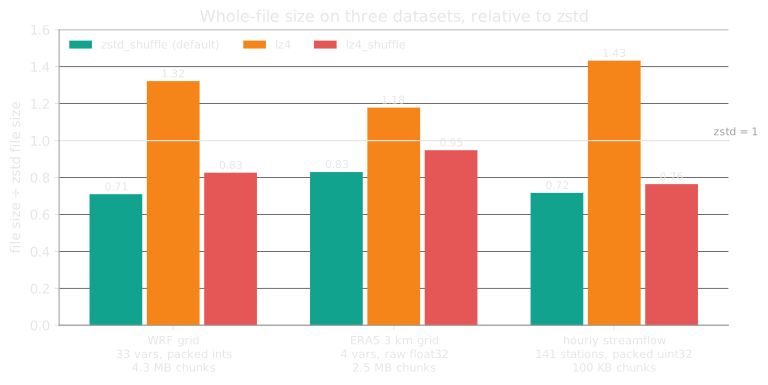
The saving carries over to station data: the streamflow series shrinks by the same 28 %, and
compression is twice as fast. At that dataset's small 25 000-element chunks, decompression is only
1.1× faster than plain zstd. On raw float32 the saving is smaller (0.83×), because the low bytes of
full-precision floats are mostly noise. The shuffle helps lz4 least on floats: lz4_shuffle is
0.95× zstd there, against 0.83× on the WRF grid and 0.76× on the stations.
Per variable
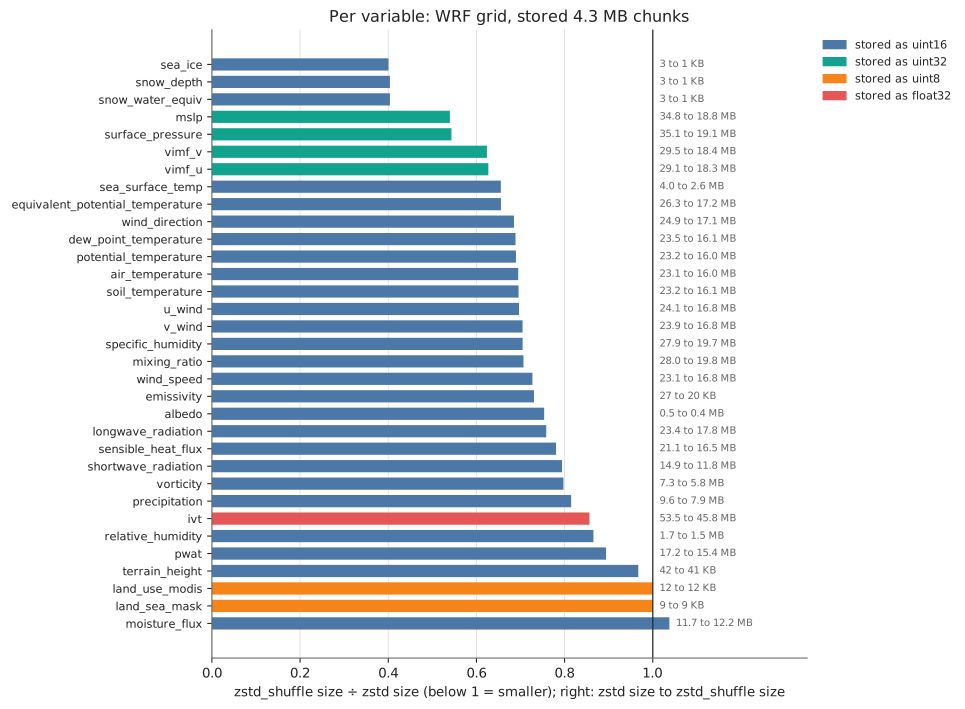
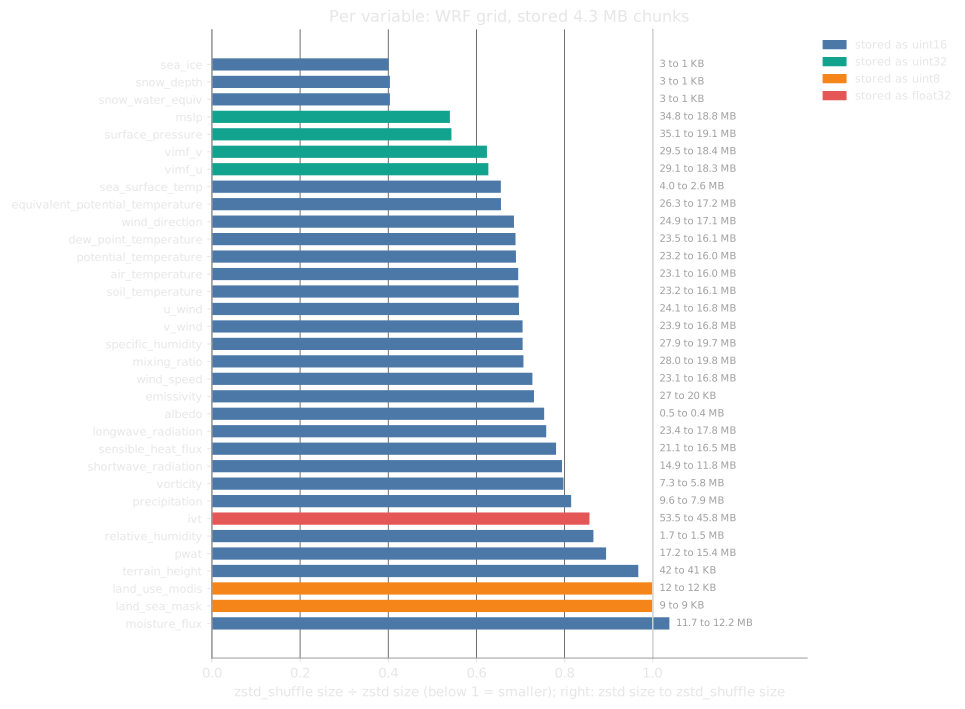
Almost every variable shrinks, most to 0.55–0.8× of their zstd size. Three cases are worth knowing:
- 1-byte values (
land_use_modis,land_sea_mask, stored as uint8) are unchanged, because a single byte has nothing to shuffle. cfdb stores 1-byte, bool, string and geometry variables unshuffled. moisture_fluxis 4 % larger shuffled (11.7 → 12.2 MB), the only WRF variable that grows. In the ERA5 set,pwat(raw float32 with many exactly repeated values) is 21 % larger, while that file as a whole still shrinks to 0.83×. Unpacked floats with repeated values are the case where plainzstdcan win.- The largest ratios are on near-constant fields (
sea_ice,snow_depth), which take up kilobytes either way, so they barely change the file size. The sizes printed next to the bars show how much each variable actually contributes.
Unpacked float64 was tested separately. Full-precision float64 with many exactly repeated
values came out up to 13 % larger shuffled (0.90–1.13× across the tests), though still faster to
read and write. If file size matters most for such data, create the dataset with
compression='zstd'. Datetimes and float32 values widened to float64 shrink a lot (0.03–0.80×).
These tests are recorded in benchmarks/results/review-cfdb-shuffle-code-1.md.
Chunk size
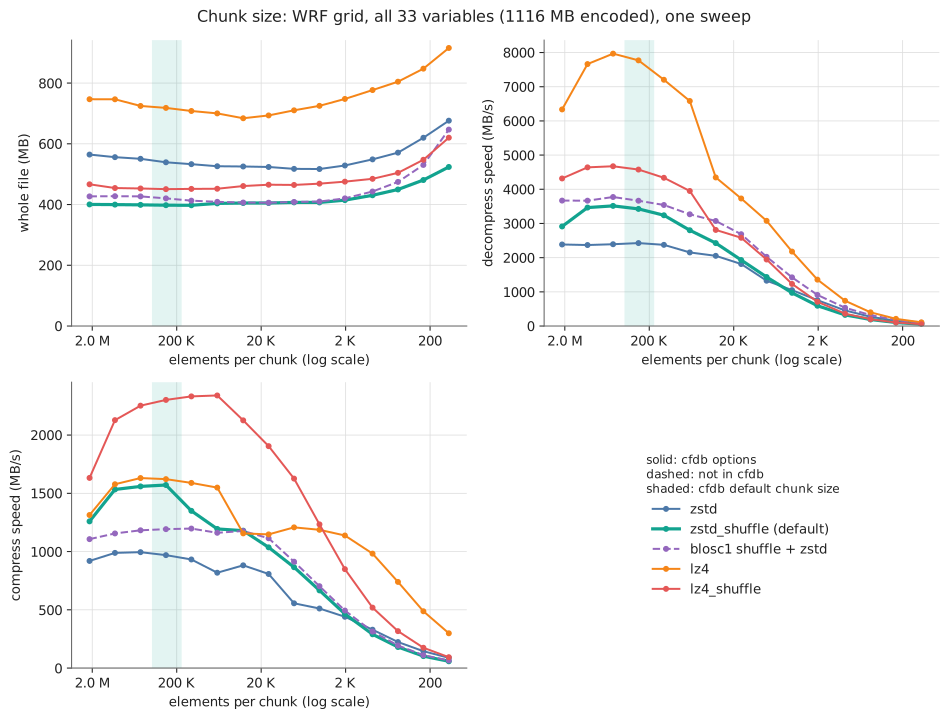
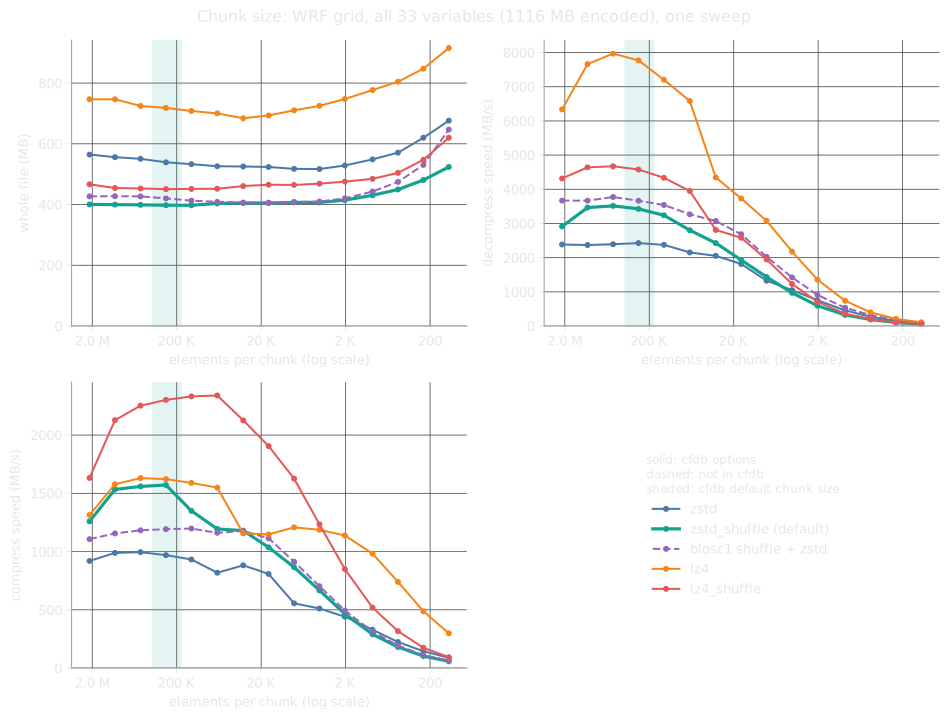
The same WRF variables were re-compressed at block sizes from the stored 2.15 M elements down to 120. Each speed point is a single timed call, so the curves are a little noisier than the table above.
- Size barely changes from 2 M down to ~4 K elements (
zstd_shuffle: 400 → 407 MB), then grows. Large chunks buy almost nothing in compression. - Speed is highest between ~65 K and ~540 K elements for every option, and cfdb's default (shaded) sits in that range. Every call to the compressor has a fixed overhead of a few microseconds, which dominates below a few thousand elements.
- The shuffle's speed advantage needs chunks of more than a few thousand elements. At ~4 K
elements and below,
zstd_shuffledecompresses slower than plainzstd; at ~1 K and below it also compresses slower. The size advantage holds at every block size. On the streamflow data, the decompression crossover is higher, between 6 K and 12 K elements.
This is one reason cfdb recommends at least ~32 K elements per chunk. What chunk size does to cfdb's
full read path (key lookups, decoding, rechunking, remote requests) is measured separately in
benchmarks/RESULTS.md and summarized in Chunking & Storage.
What else was tried
Other options were measured on the WRF grid before choosing the default. The pcodec, blosc2, zfp and
fpzip rows come from an earlier exploratory run (recorded in the compression README); sizes are
relative to the 565 MB zstd file above.
| Option | Result | Why not adopted |
|---|---|---|
| zstd level 3 (with the shuffle) | 1.5 % smaller | 1.3–1.4× slower compression; level 1 stays the default |
| shuffle + a row-difference (y-delta) filter, then zstd | 0.61× zstd | decodes at less than half the speed of zstd_shuffle; only works for grids |
| blosc1 (C shuffle + zstd) | 0.76× zstd, decodes a bit faster | a new dependency; 7 % larger than zstd_shuffle at large chunks |
| pcodec | 0.55× zstd | ~5× slower to compress, ~2.4× slower to decompress; numeric types only |
| blosc2 (shuffle + bytedelta + zstd) | 0.63× zstd | a large dependency; decodes slower than zstd_shuffle |
| zfp (lossless), fpzip | 0.88× zstd or worse | much slower in both directions |
| compressing the decoded floats instead of packed integers | larger on every variable tested | keep the integer packing |
Reviewers also tried other zstd settings (match lengths, window sizes, long-distance matching,
negative levels), per-byte-plane levels and bit-level shuffling. None beat zstd_shuffle on size,
compress speed and decompress speed at once.
Caveats
- One machine, one set of library versions. zstd 1.5.6 and 1.5.7 differ by ~2 % at level 1.
- The WRF grid dominates the evidence. The ERA5 grid is small (10 MB), and the streamflow set is a single variable.
lz4_shufflewas measured after the benchmark review, so no reviewer has checked those numbers.- Bool, datetime and int64 variables round-trip correctly in the tests, but their speed was not benchmarked.
Reproducing
The tools run on any cfdb file. From a clone of the repository:
# compare compressors on a dataset
uv run python -m benchmarks.compression.codec_bench PATH.cfdb --output-json out.json

# compression ratio and speed vs block size
uv run python -m benchmarks.compression.chunk_size_sweep PATH.cfdb --output-json sweep.json

# redraw the figures on this page
uv run --with matplotlib python -m benchmarks.compression.plot_docs
Full tables, per-variable results and the review records are in
benchmarks/compression/README.md.